Multiconsult
Energy loans
Multiconsult are engineering experts. In spring 2022, as energy costs started to soar, they wanted to use that expertise to help people make meaningful changes to their homes, not just surface tweaks.
One way to do that: reward sustainable renovation with green loans at low interest rates, and spread awareness of energy savings.
As one half of a two-person team, I designed a product that helps people evaluate how sustainable their renovation will be, and supports them when they apply for a loan.
- Role
- Product Design Lead
- When
- 2022
- Created with
- Multiconsult & Bredvid
- Work
- Workshop facilitation, UX research, Prototyping, Graphic design
Backdrop
Through research and analysis, Multiconsult knew what was holding sustainable renovation back.
When people renovated, they tended to spend their time and money on surface fixes rather than lasting change. Surface renovations felt cheaper, took less effort, and still had a big impact on property prices.
Several banks had already started offering an incentive to change that: green energy loans. Lower interest rates in return for renovations that actually matter.
Applying for them wasn't easy, though.
First you had to figure out whether your renovation would save any energy at all. Then, once the work was done, you had to prove it to the bank. No proof, no lower rate.
Opportunity
We started with the first problem.
How might we help people know up front how much impact their renovation will have?
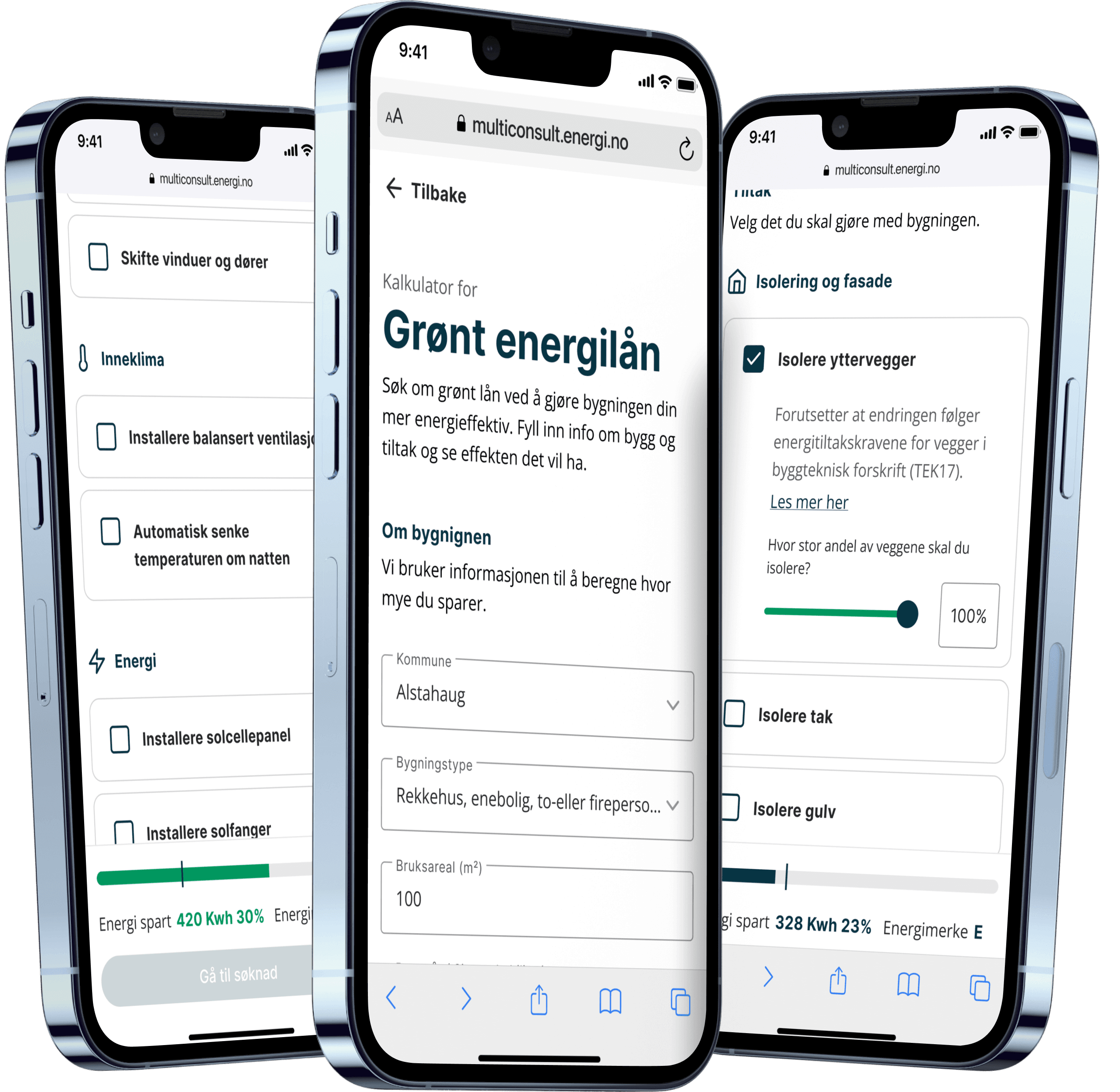
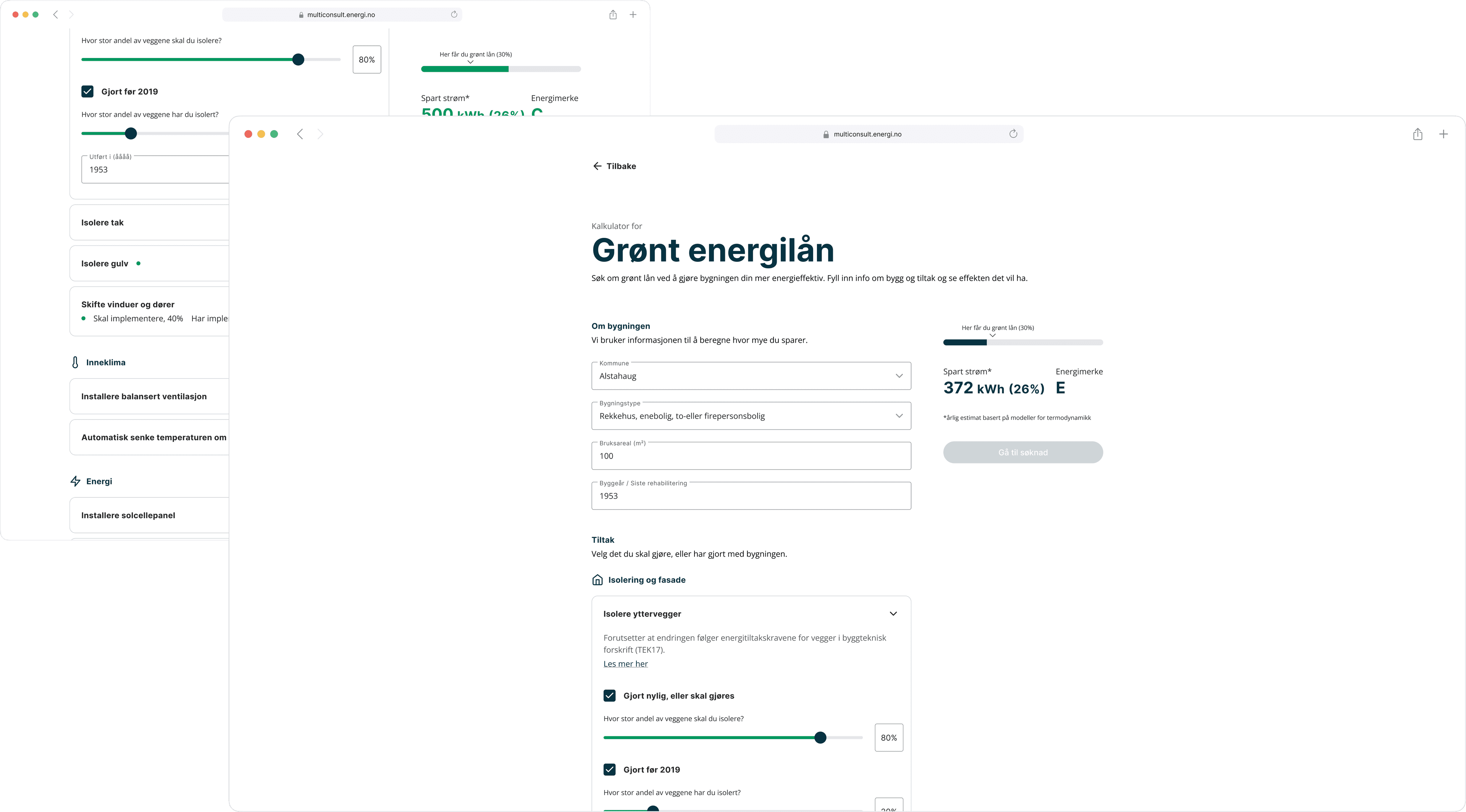
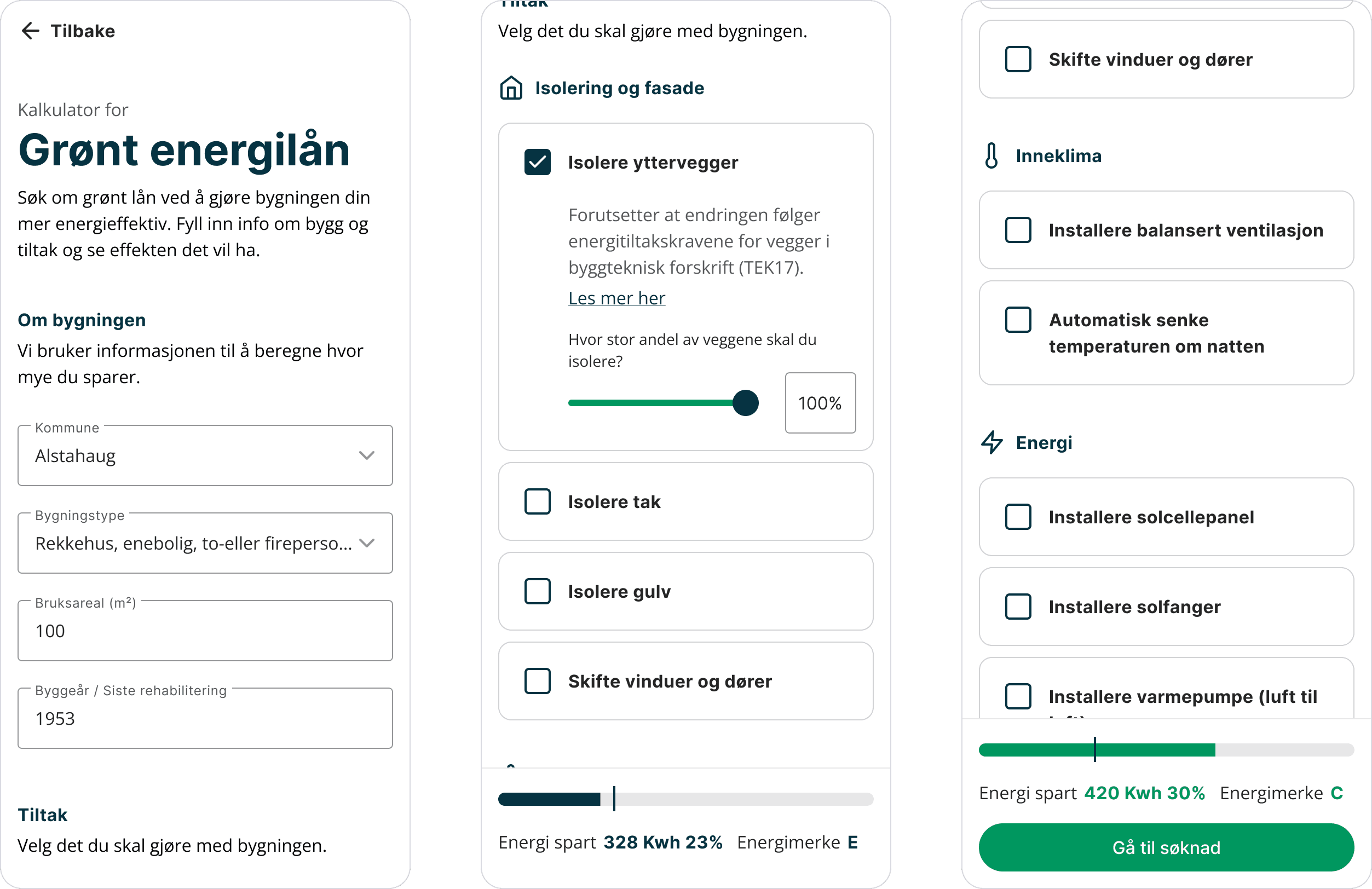
We explored different approaches and designed a product that helps people estimate how renovation changes will affect their energy use.
The idea is simple: tick off what you plan to do, and see what it's likely to save. If people know the effect before they start, the decision gets easier, and the loan application has something solid to build on.
What I did
We were a team of two, so I got to do a bit of everything:
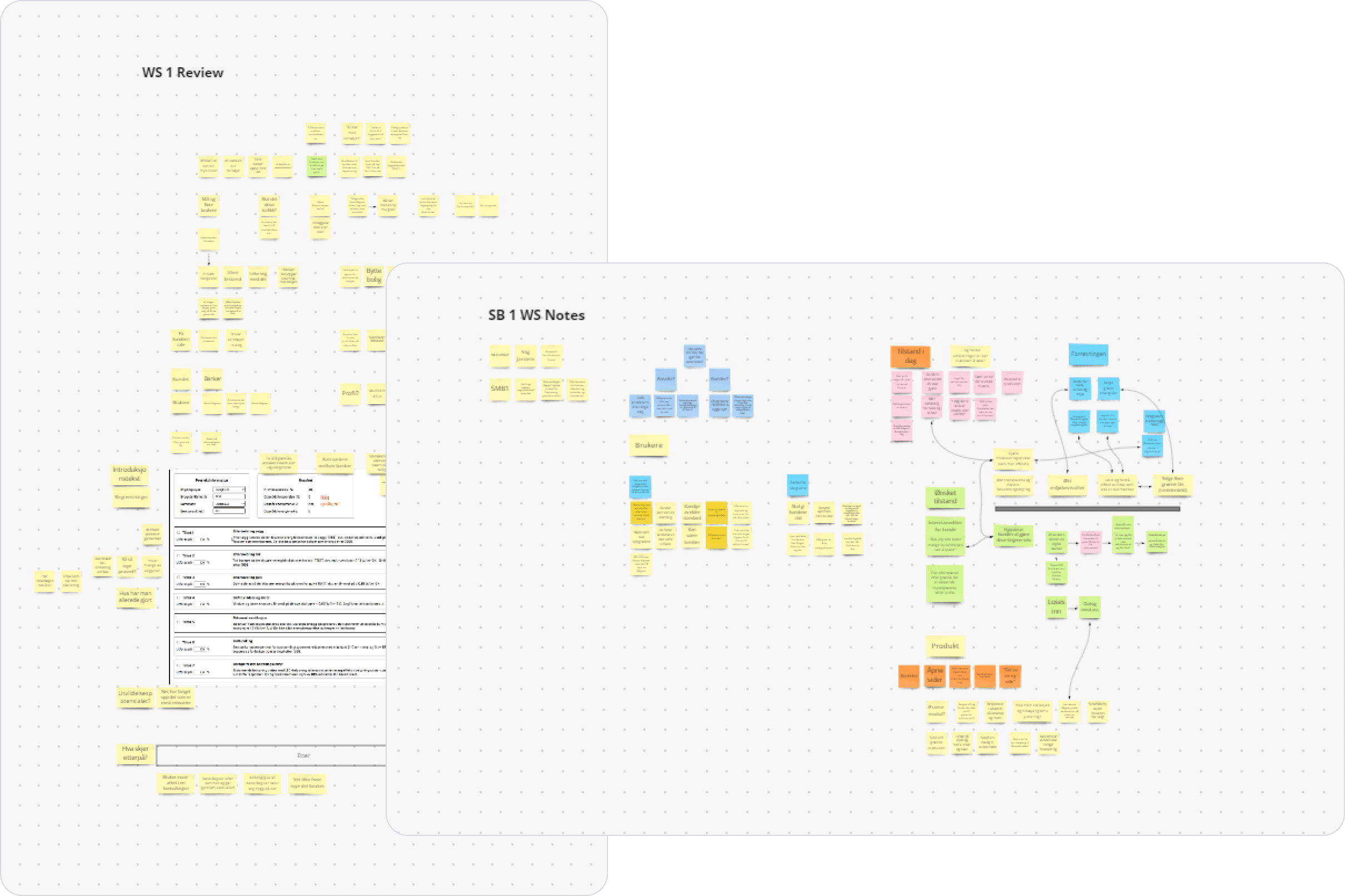
- Workshops. I planned and facilitated discovery workshops to get the problem on the table.
- Research. UX research to understand the problem from the homeowner's side.
- Sketching and prototyping. From rough frames to prototypes.
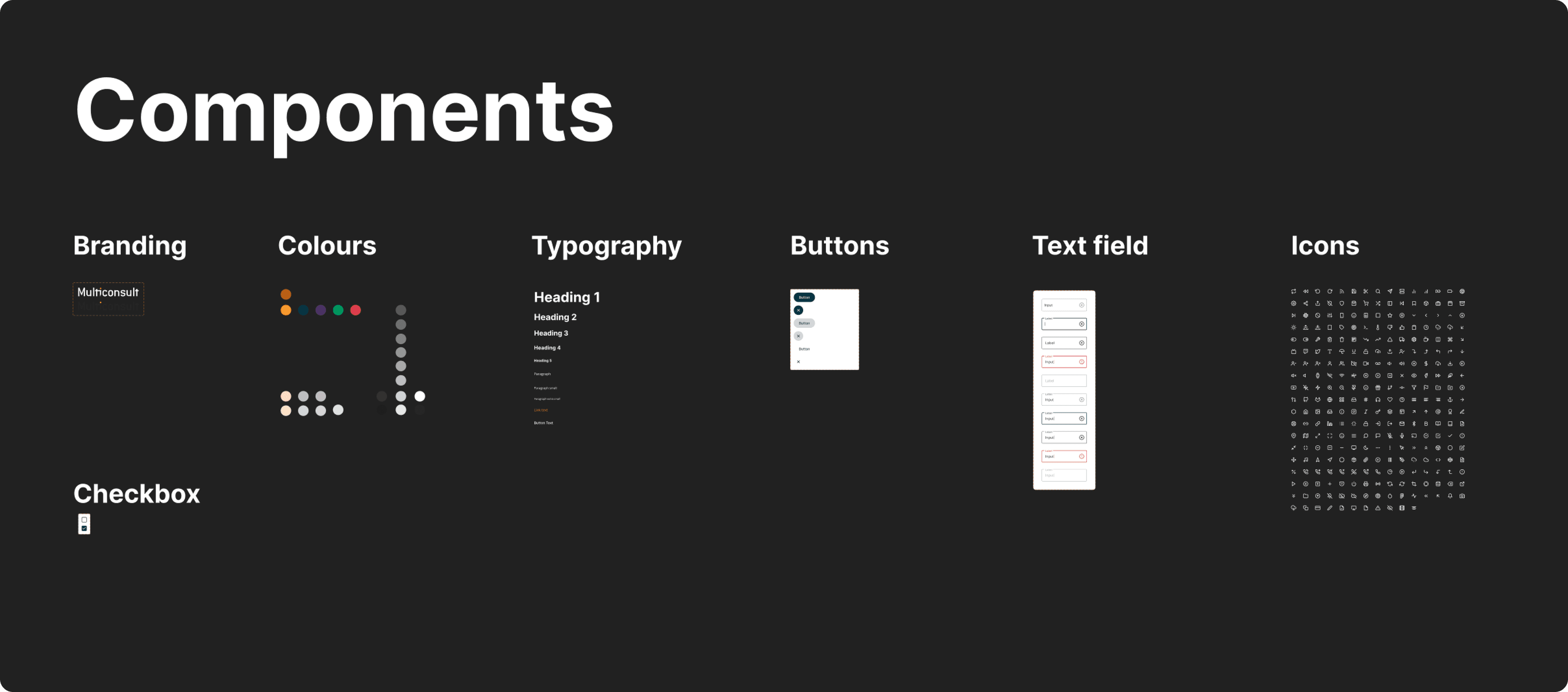
- Building blocks. Components in Figma to build the prototype from.
- Graphic design. The look of the final interface.
That's half the fun of a small team. You get to see the whole thing, from sticky notes to pixels.